
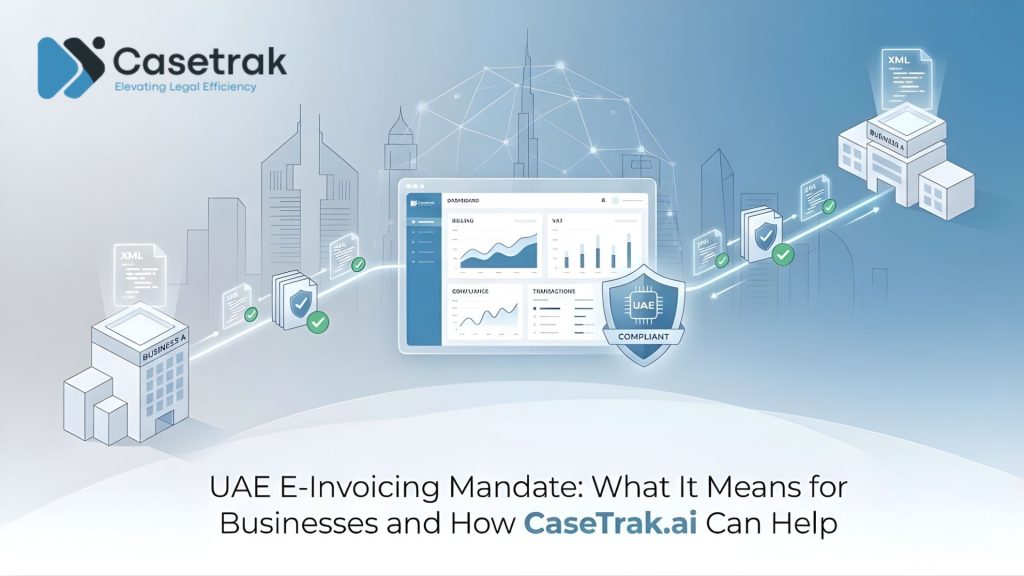
The UAE government is taking a major step toward digital tax transformation with the introduction of a nationwide e-invoicing framework. Led by the Ministry of Finance (MoF) in collaboration with the Federal Tax Authority (FTA), this initiative will fundamentally change how businesses issue, exchange, and report invoices for B2B (Business-to-Business) and B2G (Business-to-Government) transactions.
For organisations operating in the UAE—particularly professional services firms, legal practices, and advisory businesses—understanding the new e-invoicing requirements and preparing early is critical. This article outlines the new UAE e-invoicing model, key compliance obligations, implementation timelines, and how demo2.codelunar.cloud/ can support firms in generating compliant invoices seamlessly.
Overview of the UAE E-Invoicing Framework
The UAE e-invoicing system mandates the use of structured, machine-readable electronic invoices, replacing traditional paper and PDF-based invoices. The framework follows a Decentralised Continuous Transaction Control and Exchange (DCTCE) model, commonly referred to as the “5-corner model.”
The 5-Corner Model Explained
The UAE’s model involves five participants:
- Seller
- Seller’s Accredited Service Provider (ASP)
- Buyer
- Buyer’s Accredited Service Provider (ASP)
- Federal Tax Authority (FTA)
Invoices are exchanged between sellers and buyers via their respective ASPs using a secure digital network, while invoice data is reported to the FTA in near real time. This approach improves transparency, accuracy, and regulatory oversight without requiring a single central government platform for invoice exchange.
Key Technical Requirements
1. Structured Invoice Format (PINT AE)
All e-invoices must be issued in PINT AE, the UAE-specific implementation of the Peppol International (PINT) standard.
Key points:
- XML-based structured format
- Machine-readable and system-processable
- PDFs, Word files, scanned images, or emails do not qualify as e-invoices
2. Peppol Network
The UAE e-invoicing system leverages the Peppol network, a globally recognised framework for secure and interoperable electronic document exchange. Modern legal platforms designed for different legal practice types help firms manage compliance, documentation, and financial workflows more efficiently.
- Standardised invoice delivery
- Cross-platform interoperability
- Secure transmission between parties
3. Accredited Service Providers (ASPs)
Businesses must appoint an FTA-accredited ASP to:
- Validate invoice data
- Transmit invoices to buyers
- Report invoice details to the FTA platform
Implementation Timeline (Phased Rollout)
The UAE has adopted a phased approach to ensure a smooth transition:
- Voluntary Phase
From 1 July 2026
Businesses may voluntarily begin issuing e-invoices. - Mandatory Phase 1 – Large Businesses
From 1 January 2027
Applies to businesses with annual turnover exceeding AED 50 million. - Mandatory Phase 2 – Other Businesses
From 1 July 2027
Applies to all remaining in-scope businesses. - Government Entities
To be included in subsequent phases.
What Businesses Need to Do Now
To prepare for compliance, businesses should:
- Assess Readiness
Review current invoicing, billing, and finance systems. - Select an Accredited ASP
Choose an FTA-approved service provider within the prescribed timelines. - Adopt Structured Invoicing
Ensure systems can generate invoices in PINT AE (XML) format. - Align Internal Data
Standardise client, matter, tax, and billing data to meet e-invoicing field requirements.
Benefits of UAE E-Invoicing
The new framework delivers value beyond compliance:
- Automated VAT reporting and improved tax accuracy
- Reduced risk of errors and fraud
- Faster invoice processing and payment cycles
- Enhanced audit readiness
- A fully digital, paperless invoicing environment
How demo2.codelunar.cloud/ Helps Firms Comply with UAE E-Invoicing
demo2.codelunar.cloud/ is designed to support professional services firms—particularly legal and advisory practices—in navigating regulatory change while maintaining operational efficiency.
Key Capabilities
- Structured Invoice Generation
demo2.codelunar.cloud/ enables firms to generate invoice data in a structured, system-ready format aligned with UAE e-invoicing requirements. - Client and Matter-Driven Billing
Invoices are generated directly from client, matter, time, and fee data, ensuring accuracy and consistency. - ASP-Ready Integration
demo2.codelunar.cloud/ can integrate with accredited ASPs, ensuring seamless invoice validation, transmission, and FTA reporting. - Compliance by Design
Mandatory data fields, VAT logic, and billing rules are embedded into the invoicing workflow. - Scalable for Future Phases
Whether firms are preparing early or responding to mandatory timelines, demo2.codelunar.cloud/ scales with regulatory requirements.
Preparing for the Future
The UAE e-invoicing mandate is not simply a regulatory change—it is a shift toward a digitally connected financial ecosystem. Firms that prepare early will benefit from improved efficiency, reduced compliance risk, and better financial visibility.
demo2.codelunar.cloud/ helps firms move beyond compliance, transforming invoicing into a streamlined and future-ready process. With its secure client portal for law firms, teams can safely share documents, communicate with clients, and manage case-related information in one place.
Ready to Prepare for UAE E-Invoicing?
Contact demo2.codelunar.cloud/ to learn how we can help your firm generate compliant e-invoices, integrate with accredited service providers, and stay ahead of the UAE’s e-invoicing mandate.